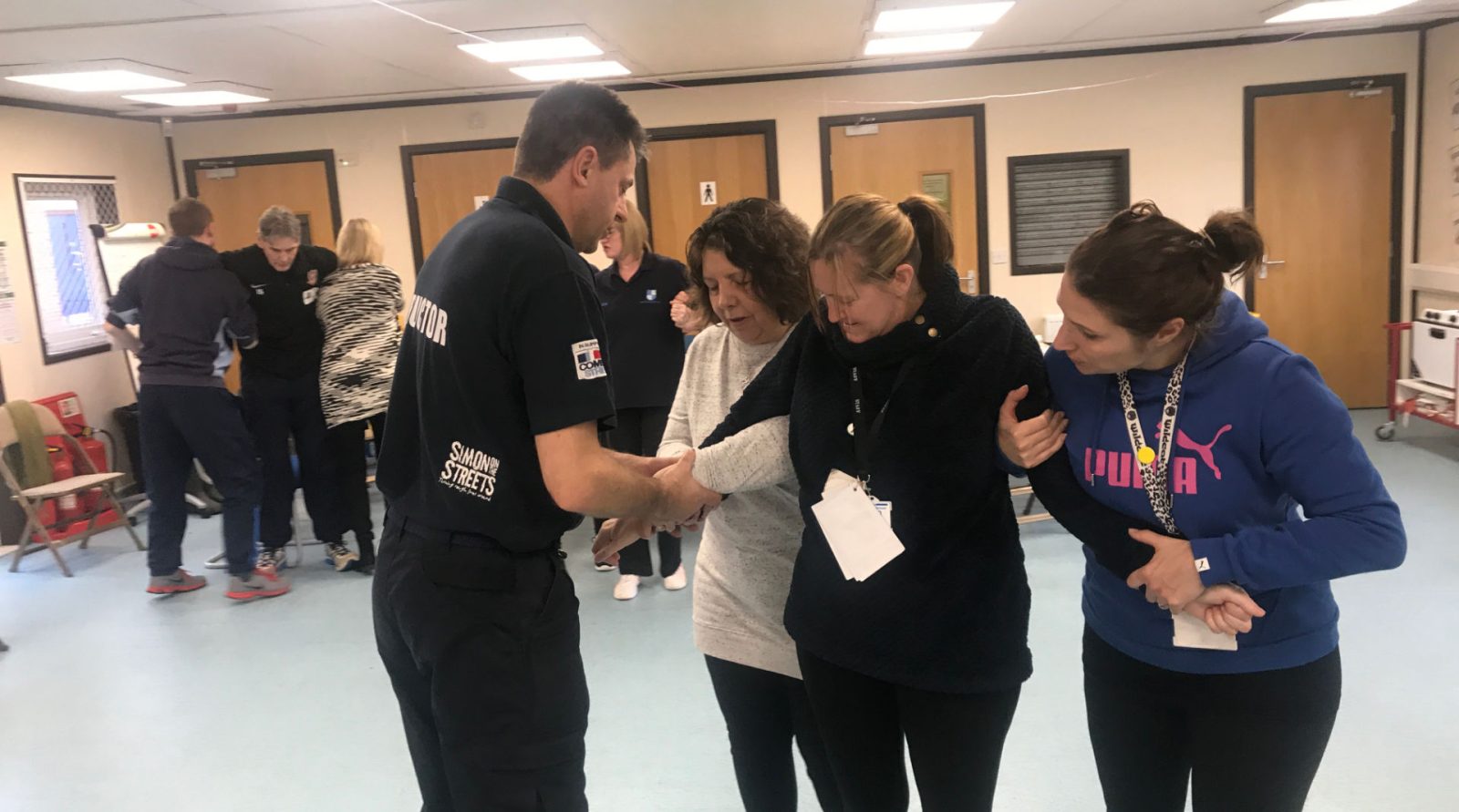
Organisations are increasingly focused on reducing restrictive practices and ensuring staff use the least restrictive options when managing risk. In many environments, staff need the confidence and capability to respond to physical situations without resorting to restraint.
This is particularly relevant across:
- NHS and healthcare settings, including mental health and community services
- Care homes and supported living services, supporting individuals with complex needs
- Education and specialist provision settings, where restraint reduction is a priority
- Charities and organisations supporting vulnerable individuals
This qualification supports organisations in meeting their duty of care under the Health and Safety at Work Act 1974, while aligning with restraint reduction principles, NHS Violence Prevention and Reduction (VPR) standards, and expectations from CQC and Ofsted.
By focusing on disengagement and non-restrictive techniques, this course helps reduce risk, improve safety, and promote more positive outcomes for both staff and service users.
This accredited course combines underpinning knowledge with practical, non-restrictive physical skills, ensuring learners can respond safely and proportionately to physical risk.
Content is tailored to your organisation, but typically includes:
- Understanding behaviour, risk, and escalation
Exploring how and why situations escalate to physical risk, including environmental and individual factors
- Legal framework and use of force
Understanding responsibilities, duty of care, and the principles of reasonable, necessary, and proportionate response
- Principles of non-restrictive practice
Focusing on the least restrictive options and prioritising disengagement over control
- Personal safety awareness and dynamic risk assessment
Making informed decisions in real time to reduce risk and maintain safety
- Positioning, distancing, and movement
Using space, body positioning, and movement to reduce vulnerability
- Disengagement techniques from common holds and grabs
Practical skills to safely break contact from wrist grabs, clothing holds, and other forms of physical interaction
- Protective responses to physical aggression
Techniques to protect against pushes, strikes, and sudden aggression while prioritising escape
- Safe release and exit strategies
Creating opportunities to disengage and move to safety quickly and effectively
- Decision-making under pressure
Knowing when to disengage, seek support, or escalate appropriately
- Scenario-based learning aligned to your environment
Realistic simulations based on your staff roles and level of risk
- Assessment and knowledge checks
Learners will complete assessment in line with NFPS requirements to demonstrate competence
This is a 2-day accredited training course, designed to provide both theoretical understanding and practical skill development.