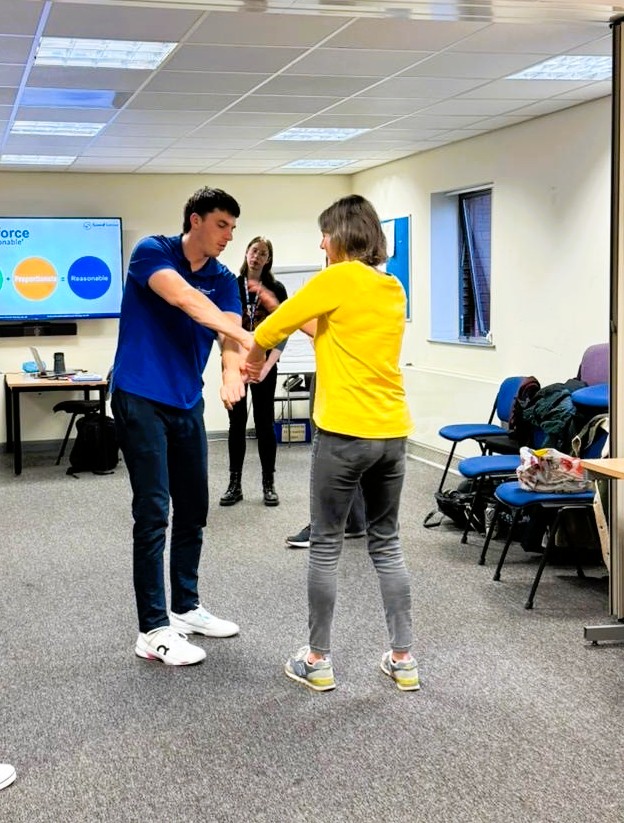
In many roles, staff may encounter situations where de-escalation alone is not enough to manage risk. Without appropriate training, attempts to intervene physically can increase the likelihood of injury, escalation, or legal challenge.
This is a key requirement across sectors including:
- Healthcare and NHS settings, where staff may need to respond to physical aggression
- Care homes and supported living services, supporting individuals with complex needs
- Education and specialist provision settings, managing behaviours that may present risk
- Security, retail, and customer-facing roles, where staff may need to respond to incidents quickly
- Local authorities and housing teams, working in unpredictable environments
Our training supports organisations in meeting their duty of care under UK legislation, including the Health and Safety at Work Act 1974, while aligning with sector guidance such as NHS VPR, CQC, and Ofsted expectations. It ensures staff are equipped to act safely, proportionately, and with confidence.
This course combines underpinning knowledge with practical, scenario-based skills to ensure staff can safely and effectively respond to physical risk.
Content is tailored to your organisation, but typically includes:
- Understanding risk, behaviour, and escalation
Exploring how and why situations escalate to physical risk, including environmental and behavioural factors
- Legal framework and use of reasonable force
Understanding when physical intervention is justified and how to ensure actions are proportionate, necessary, and defensible
- Personal safety awareness and dynamic risk assessment
Making safe decisions in real time, recognising risk, and prioritising safety
- Positioning, distancing, and safe approaches
Reducing vulnerability through effective positioning, movement, and awareness
- Breakaway techniques from common grabs and holds
Practical skills to safely disengage from wrist grabs, clothing holds, and other forms of physical contact
- Protective responses to strikes and sudden aggression
Simple, effective methods to protect against pushes, strikes, and unexpected assaults
- Safe disengagement and exit strategies
Creating opportunities to break contact and move to safety as a priority
- Introduction to physical intervention techniques (where appropriate)
Safe, proportionate methods to manage risk when disengagement is not immediately possible
- Teamwork and coordinated responses (for higher-risk settings)
Working safely with colleagues to manage situations effectively
- Decision-making under pressure
Knowing when to intervene, when to withdraw, and when to seek support
- Scenario-based training aligned to your environment
Realistic simulations reflecting your staff roles, setting, and level of risk
- Post-incident considerations and reporting
Supporting safe practice, reflection, and continuous improvement
We offer flexible training options depending on your organisation’s level of risk and operational requirements:
- 1 Day – Breakaway & Personal Safety Focus
Core skills for disengagement, positioning, and risk awareness
- 2 Day – Core Physical Intervention Training
Includes breakaway skills and introduction to physical intervention techniques
- 3 Day – Enhanced / Higher Risk Training
Advanced skills, team-based approaches, and more complex scenarios
All courses are tailored to your environment and staff roles.