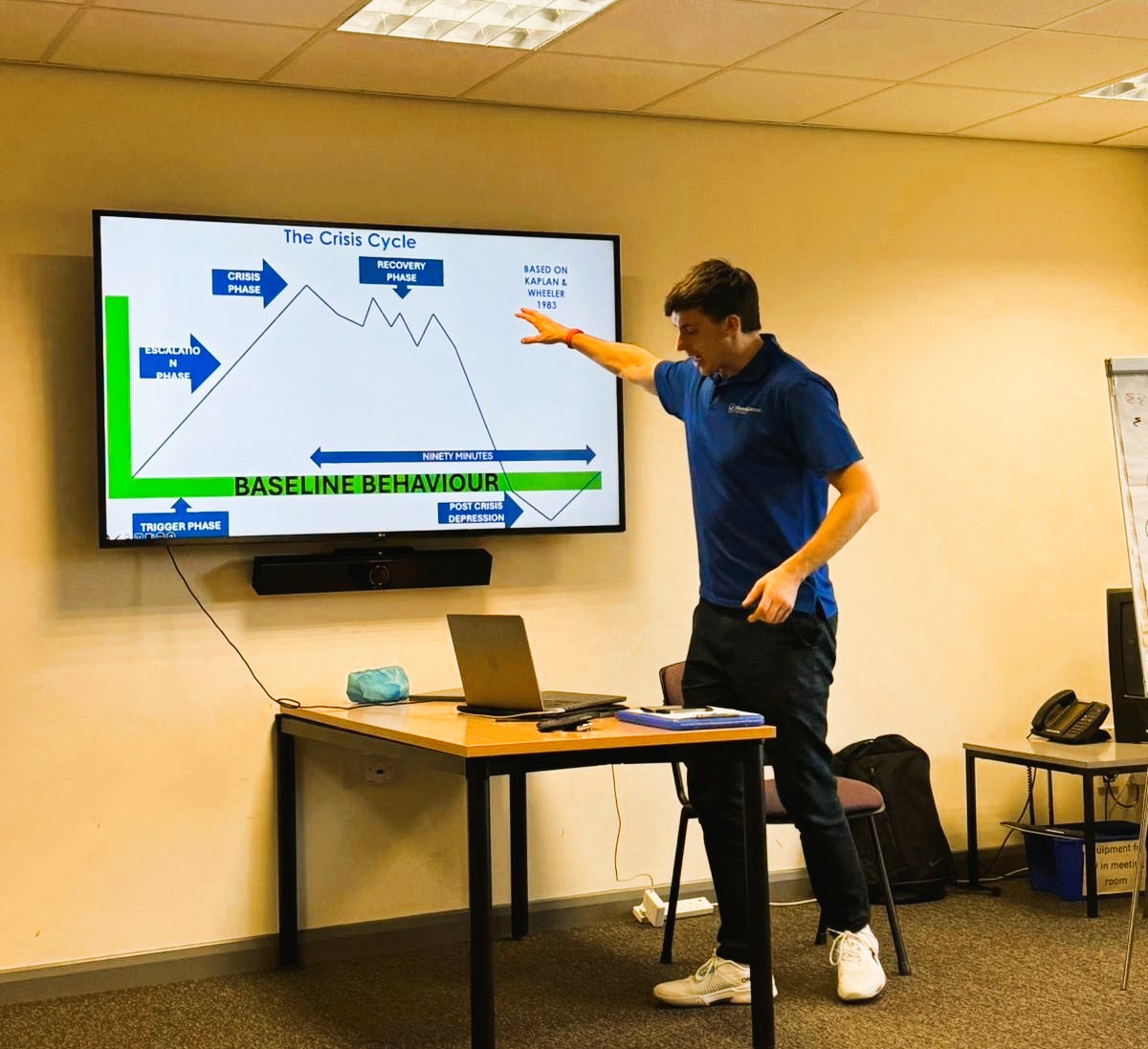
In many roles, staff may face situations where there is a risk of physical aggression. Without the right training, attempts to respond can increase the risk of injury, escalation, or legal challenge.
An accredited qualification provides assurance that staff are not only trained but can demonstrate competence in applying safe and proportionate techniques.
This is particularly valuable across sectors such as:
- NHS and healthcare settings, where staff may encounter physical aggression
- Care homes and supported living services, supporting vulnerable adults
- Education and specialist provision settings, managing behaviours that may present risk
- Security and frontline roles, where staff may need to respond to incidents
- Local authorities and housing teams, working in unpredictable environments
This course supports organisations in meeting their duty of care under the Health and Safety at Work Act 1974, while aligning with recognised standards in personal safety training and promoting safe, legally compliant practice.
This accredited course combines practical physical skills with underpinning knowledge, ensuring learners can respond safely, confidently, and proportionately to physical risk.
Content is tailored to your organisation, but typically includes:
- Understanding personal safety and physical risk
Exploring how and why situations escalate to physical aggression and how to reduce risk
- Legal framework and use of reasonable force
Understanding when physical intervention is justified and how to ensure actions are necessary, proportionate, and defensible
- Recognising escalation and early warning signs
Identifying behaviours and situations that may lead to physical confrontation
- Positioning, distancing, and personal safety strategies
Reducing vulnerability through awareness, movement, and safe positioning
- Breakaway techniques from common grabs and holds
Practical methods to safely disengage from wrist grabs, clothing holds, hair pulls, and other forms of physical contact
- Protective responses to strikes and sudden aggression
Simple, effective techniques to protect against pushes, strikes, and unexpected assaults
- Safe disengagement and exit strategies
Prioritising escape and safety over prolonged physical engagement
- Decision-making and dynamic risk assessment
Knowing when to disengage, seek support, or take further action
- Scenario-based learning and practical application
Applying skills to realistic situations relevant to the learner’s role
- Assessment and knowledge checks
Learners will complete assessments in line with NFPS requirements to demonstrate competence