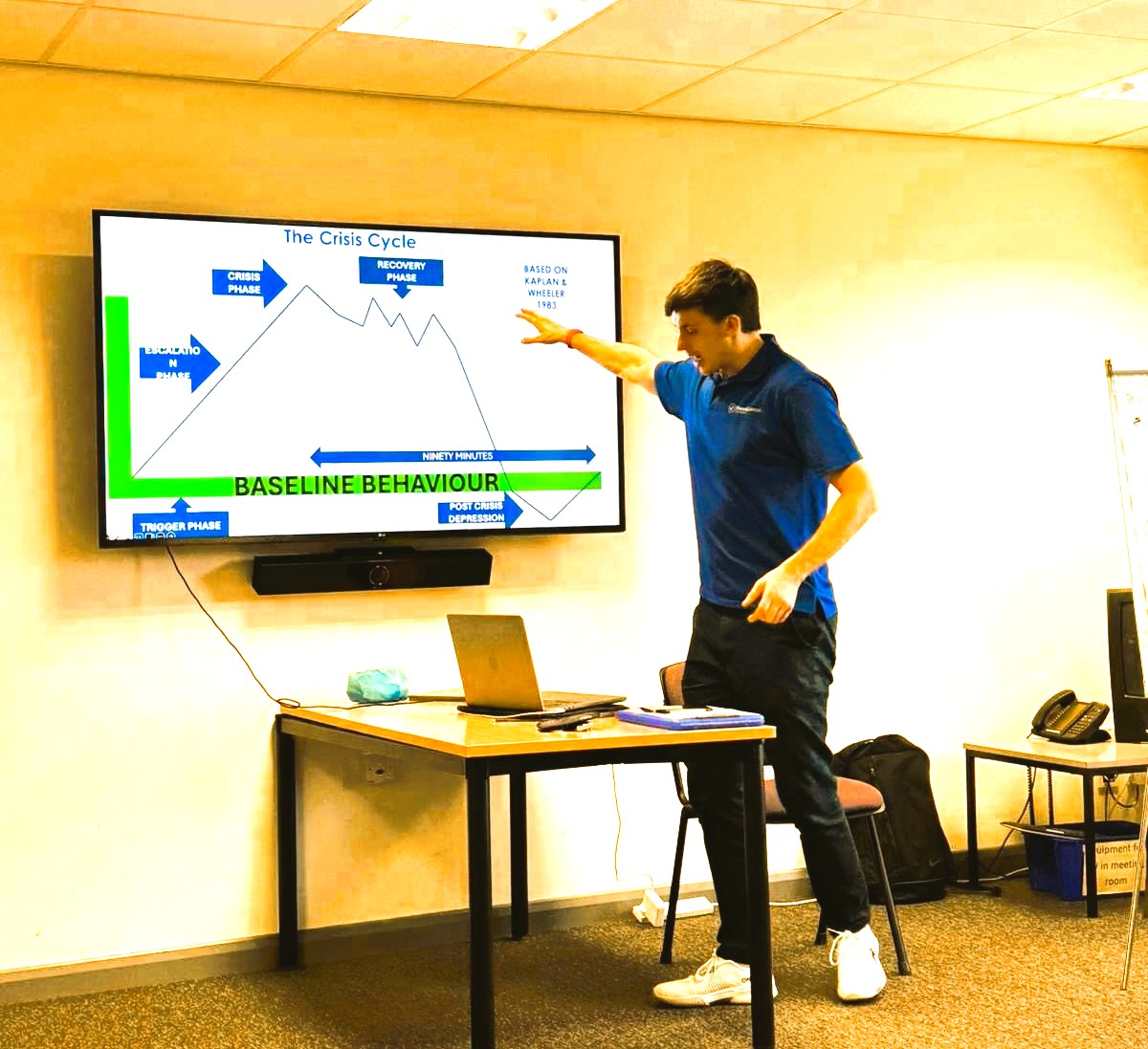
Violence and aggression towards staff remains a significant challenge across healthcare, care, and public-facing services. NHS staff alone report thousands of incidents each year, with similar risks present in mental health settings, community services, and social care environments.
This is a critical priority across sectors including:
- NHS and healthcare settings, including acute, mental health, and community services
- Care homes and supported living services, supporting vulnerable adults
- Children’s residential and specialist education settings, where behaviours may present risk
- Local authorities and social care teams, working in complex and unpredictable environments
Our PMVA training supports organisations in meeting their duty of care under UK legislation, including the Health and Safety at Work Act 1974, while aligning with NHS Violence Prevention and Reduction (VPR) standards, RRN principles, and regulatory expectations from CQC and Ofsted. It helps organisations reduce risk, improve staff safety, and promote safe, person-centred care.
This course combines de-escalation, behavioural understanding, and physical skills to ensure staff can prevent, manage, and respond to violence and aggression safely and proportionately.
Content is tailored to your organisation, but typically includes:
- Understanding violence, aggression, and behaviour
Exploring causes, triggers, and contributing factors, including mental health, trauma, and environmental influences
- Early recognition of escalation and warning signs
Identifying behaviours and cues that indicate increasing risk
- Communication and de-escalation strategies
Using structured approaches to reduce tension and manage challenging interactions
- Personal safety and dynamic risk assessment
Making safe decisions in real time based on changing situations
- Positioning, teamwork, and safe approaches
Working individually and as a team to manage risk and maintain safety
- Breakaway and disengagement techniques
Safely responding to grabs, holds, and physical contact
- Physical intervention skills (where appropriate)
Proportionate, legally compliant techniques to manage risk when de-escalation is not sufficient
- Use of force and legal framework
Understanding reasonable, necessary, and proportionate responses under UK law
- Person-centred and trauma-informed approaches
Ensuring dignity, safety, and wellbeing remain central to all interventions
- Scenario-based training aligned to your environment
Realistic simulations reflecting your setting, service users, and risks
- Post-incident procedures and reporting
Supporting safe practice, documentation, and continuous improvement
We offer flexible PMVA training options depending on your organisation’s level of risk, staff roles, and operational requirements:
- 1 Day – PMVA Awareness & De-escalation
Focused on communication, prevention, and personal safety
- 2 Day – Core PMVA Training
Includes de-escalation, breakaway skills, and introduction to physical intervention
- 3 Day – Enhanced / Higher Risk PMVA Training
Advanced skills, team-based interventions, and more complex scenarios
All courses are tailored to your environment and can be adapted to meet specific organisational needs.